

Peter Clegg
Download PDF
Feb 2 2026
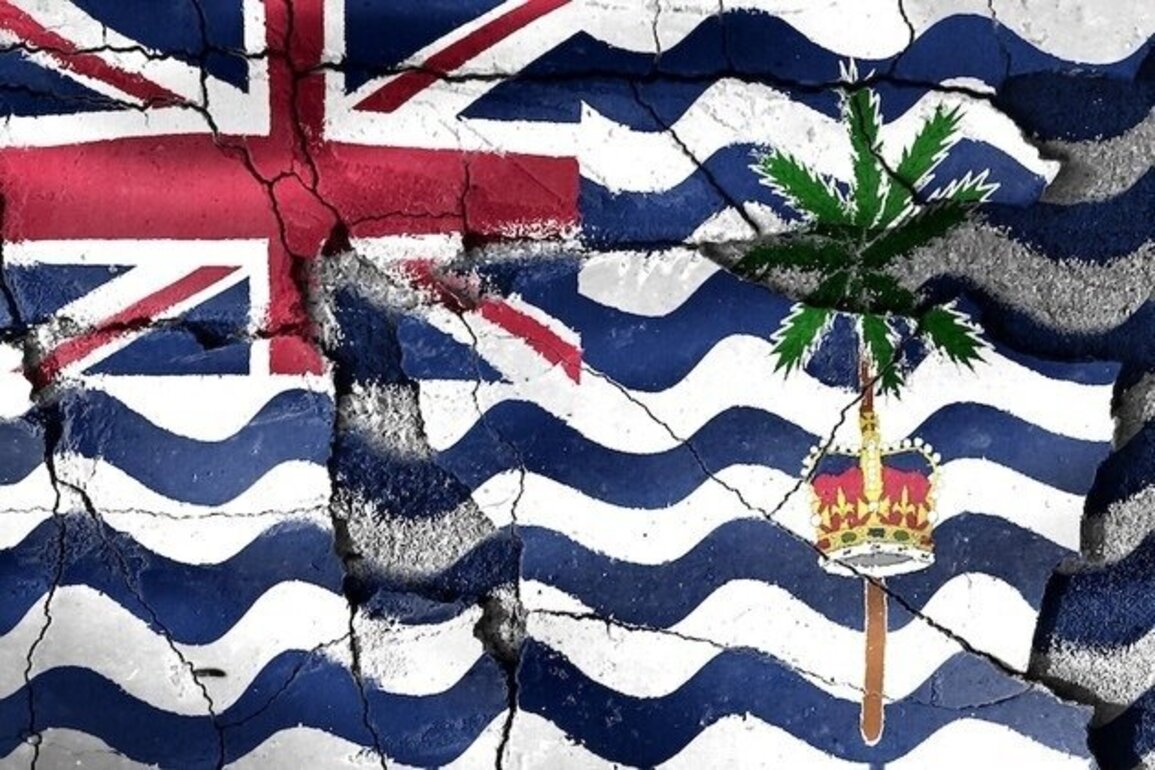
MP_foto71/DepositphotosIn May 2025, I authored an article entitledChagos Deal Is Done: Sovereignty Is Returned to Mauritius. Arguably, that title was somewhat premature, as a great deal has happened since then. The past eight months have seen the legislation required to return the Chagos Archipelago to Mauritius progress through most of its parliamentary stages (though not without difficulty), opponents intensifying their objections, and signs of a possible change of heart by the Trump administration, which had previously been supportive. Yet although much has changedat least rhetoricallythe fundamentals of the case for returning Chagos to Mauritius remain sound.
TheDiego Garcia Military Base and British Indian Ocean Territory Billpassed Second Reading on 9 September and completedCommittee of the whole House and Remaining Stageson 20 October, with MPs voting 318174 to retain the central clause formally ceding UK sovereignty over the British Indian Ocean Territory (BIOT)the UKs official designation for the Chagos Archipelago. The Bill then encountered closer scrutiny in the House of Lords. AtReport Stagein early January 2026, peers added amendments aimed at increasing financial transparency, creating a mechanism to pause or halt payments if the base became unusable or if Mauritius failed to meet obligations following disputeresolution procedures, and requiring a referendum of Chagossians on the treatys terms. The changes were subsequently overturned in theCommons, with Ministers arguing that the treaty already included robust disputesettlement provisions and that a referendum cannot be used to reopen a concluded statetostate agreement.
As debate intensified in late January, a final planned Lords sitting was pausedand remains sopartly because opposition peers linked the Bills timing to concerns about potential friction with the1966 USUK agreementgoverning defence use of BIOT. Opponents have cited Article 1, which states that The Territory shall remain under United Kingdom sovereignty, to argue that the UK cannot ratify a treaty recognising Mauritian sovereignty without first amending the 1966 framework. However, it does appear these concerns have been overstated. First, the 1966 document is an exchange of notes and not a full treaty, meaning it is less formal. Second, it has beenarguedthat the agreement was designed to allow the functioning of the joint military base on Diego Garcia during the Cold War, not to freeze sovereignty arrangements permanently. The 2025 treaty maintains uninterrupted USUK basing, preserving all operational guarantees while transferring sovereignty to Mauritius. Therefore, ratification would not violate international law or undermine defence commitments, and the 1966 agreement poses no legal barrier.
The cost of the deal has been another flashpoint, but again there has been some disinformation.Criticscite a headline 35 billion figure, which simply totals 99 years of payments without accounting for inflation or the time value of money. However, government calculations apply the Treasurys social time preference rate, discounting future payments by 2.53.5% annually, producing a net present value of about 3.4billion. This discounted figure is more economically meaningful because it reflects what the payments are worth in todays money rather than their inflated nominal sum over a century-long horizon. It is still a significant amount, although equivalent to 0.2% of the UKs annual defence budget.
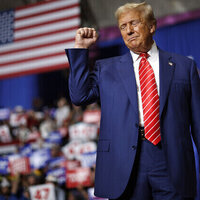
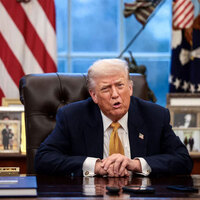
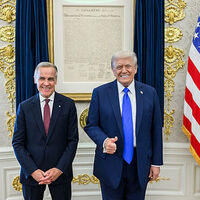
The path towards ratification appeared to become more difficult when US President Donald Trump denounced the agreement as anact of GREAT STUPIDITY, linking it rhetorically to his push to acquire Greenland and accusing the UK of handing over vital territory for no reason whatsoever. This public reversal surprised London, given that the US had explicitly backed the deal in May 2025, with Secretary of StateMarco Rubiostating that it secures the longterm, stable, and effective operation of the joint USUK military facility at Diego Garcia. UK ministers continue to say that relevant US departments and intelligence agencies stand by that earlier assessment.
Trumps comments created political ripples, emboldening opponents to intensify their lobbying efforts in Washington. This included a newly energisedChagos government in exile, whose delegationreportedlyoffered to rename one of the Eagle Islands in the Chagos Archipelago Trump Island if the US President moved to block the deal. Meanwhile, much of the press continued to accuse the UK government ofsurrenderin negotiating with Mauritius. Yet the deal that Rubio and other US officials supported remains unchanged. The operative clauses of the 2025 treaty largely mirror longstanding practice: the UK and US retain unrestricted access to Diego Garcias air and sea space for defence; the UK maintains jurisdiction and control over personnel on the base; Mauritius is notified after, rather than asked to consent before, any armed action; and stringent securityreview vetoes continue to govern installations near the island. The treatys annexes further codify and strengthen these protections. Beyond Diego Garcia itself, any proposal involving thirdcountry security forces or new construction within 1224 nautical miles triggers mandatory joint security reviews.
These safeguards underpin the support expressed by alliesincluding all Five Eyes partners and regional actors such as India and Japanalongside the earlier US endorsement. They also strengthen many analysts assessments that the treaty reduces, rather than expands, opportunities for adversary influence in the central Indian Ocean. International legal considerationsoften overshadowed in recent monthsremain pivotal. In 2019, theInternational Court of Justiceadvised that the detachment of Chagos from Mauritius in 1965 was unlawful and that the UK should end its administration as rapidly as possible. The UN General Assembly endorsed that view, and the UN system has since behaved as if Mauritius is the relevant coastal state. For example, the 2021International Tribunal for the Law of the Seajudgment in the MauritiusMaldives maritime case proceeded on that basis.
Specialised bodiesincluding the Universal Postal Union and elements of nuclear testban and telecommunications governancehave also shown a willingness to treat UK legal claims over BIOT as contested or inapplicable. This raises practical risks for communications, overflights, and contractor operations essential to the base. Without the deal, a new round of contentious proceedings could quickly have led to provisional measures or institutional decisions thatregardless of UK acceptance of jurisdictionwould impede aspects of Diego Garcias functioning.
Despite the turbulence of recent monthsparliamentary delays, sharpened domestic opposition, and shifting rhetoric from Washingtonthe fundamental case for the UKMauritius agreement remains intact. The legal, strategic, and geopolitical drivers underpinning the 2025 treaty have not changed. If anything, debates in late 2025 and early 2026 have highlighted how essential a negotiated settlement is to stabilising the UKs position, ensuring operational certainty for the base, and preventing further international legal erosion of British (and, by extension, US) claims over BIOT.
Where the Government has struggled is not in the substance of the deal but in its political stewardship. As in other major policy areas, Keir Starmer and the Labour Government have not consistently been proactive in explaining, defending, and contextualising the agreement. Criticsboth principled and opportunistichave therefore filled the political space, framing the treaty as a strategic concession rather than a pragmatic solution to structural legal vulnerabilities the UK could no longer ignore. Yet the treaty itself has not shifted in any way that justifies this backlash: the operational guarantees for the UK and US remain robust, and the security architecture around Diego Garcia is arguably stronger than before.
For all the noise, the deal remains likely to pass. Parliamentary arithmetic favours approval once the Commons reasserts itself, and alliesespecially Five Eyes partnerscontinue to regard the treaty as stabilising. Even if President Trump moved from rhetorical opposition to concrete action to block implementation, this would not settle the matter it would merely defer it. The underlying international legal issues would immediately reassert themselves and Mauritius would resume contentious proceedings at the ICJ, before ITLOS, and across multiple specialised UN agencies. Each round of litigation or institutional decisionmaking would further erode the UK/US position, increasing operational uncertainty around Diego Garcia and risking precisely the kind of disruption opponents of the treaty claim to fear.
Further Reading on E-International Relations
- Evaluating the Repercussions of the Chagos Islands Sovereignty Deal
- Is the Chagos Deal Really Under Threat?
- Opinion The Chagos Islands and the Triumph of Great Power Politics over Human Rights
- Opinion How Could Iran Survive Trumps Maximum Pressure 2.0?
- Age of the Deal: Donald Trump Won the Battle of Seattle
- Opinion Immediate Ceasefire in Ukraine Is a Double-Edged Sword
About The Author(s)
Professor Peter Cleggis Head of the School of Social Sciences at the University of the West of England, Bristol. He has been a Visiting Fellow at the Institute of Commonwealth Studies in London, and a Visiting Research Fellow at the Sir Arthur Lewis Institute of Social and Economic Studies (SALISES) at the University of the West Indies in Jamaica.
TagsChagos IslandsDonald Trump