

Armed violence and insecurity in Haiti have exposed already vulnerable children to sexual violence and exploitation, the UN Office for the Coordination of Humanitarian Affairs (OCHA) warned on Wednesday.
Shattered by her husbands death during the rising tide of gang violence in Haiti last year, Christiana and her six children fled 223 kilometres from their hometown to the city of Mirebalais, where her six-year-old daughter, Leineda, began treatment for malnutrition.
The UN has raised concern over a growing number of vulnerable Haitians particularly pregnant women, new mothers, and infants being deported from the Dominican Republic.
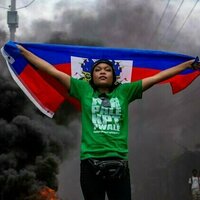
Since the assassination of President Jovenel Mose in 2021, gang violence has permeated the capital Port-au-Prince and expanded into other regions, displacing over one million people.
The International Organization for Migration (IOM) estimates that more than half of the displaced are children, meaning one in eight Haitian children has been uprooted in recent years.
Children on the frontlines
Such displacement puts an already vulnerable population further at risk, increasing their chances of malnutrition, sexual violence and abuse. The UN Childrens Fund (UNICEF) has documented a 1,000 per cent increase in sexual violence against children between 2023 and 2024.
Continued displacement also puts children at risk of being recruited by gangs - they are already estimated to make up 50 per cent of all gangs in Haiti.
OCHAsaidthe shocking death of a six-year-old girl on 3 May after she was brutally raped in a temporary displacement site in Port-au-Prince was a stark reminder of the extreme dangers faced by children living in highly precarious conditions.
This intolerable act shakes our conscience, the UN Humanitarian Coordinator in Haiti, Ulrika Richardson, said ina statement.
No child should ever endure such violence. We hope that justice will be served."
We cannot look away
Despiteincreasedchallenges to providing aid in Haiti, UN humanitarian partners have stepped up efforts to support survivors of sexual violence across affected regions.
In the past few months, over 6,000 people, many of whom are women and children, have received psychosocial care. Additionally, 745 dignity kits have been distributed and 600 people have been reached by an increasing number of mobile care clinics.
Partners are also implementing legal, medical and socio-economic reintegration services.
However, the ability of UN agencies and partners to continue distributing this aid is impaired by severe underfunding. In relation to gender-based violence alone, the UN has only received five percent of the $11 million needed to continue providing life-saving services.
Ms. Richardson upheld the UN's commitment to children in Haiti
"We cannot look away, she said. The suffering of Haitis children is a call to our collective humanity. Acting together, in a coordinated and determined manner, is more necessary than ever to protect civilians and secure displacement sites.
IOM/Antoine LemonnierDeported migrants pass the border between the Dominican Republic and Haiti in Ouanaminthe.Pregnant women deported
UN humanitarians in Haiti have also expressed deep concern over the growing number of pregnant and breastfeeding women being deported from neighbouring Dominican Republic, in violation of international standards.
For the past month, approximately 30 women who are pregnant or breastfeeding have been treated at humanitarian centres on the Haitian border.
These expulsions raise serious humanitarian and human rights concerns, particularly when they involve pregnant women or mothers with very young children, Ms. Richardsonsaid.
The deportations are part of a largerincreasewhich witnessed over 20,000 deportations from the Dominican Republic in April alone, the highest number on record.
The UN team in Haiti called for regional solidarity and migrational policies which uphold human dignity.
IOM/Antoine LemonnierDeported migrants pass the border between the Dominican Republic and Haiti in Ouanaminthe.